Projects
Some things I made
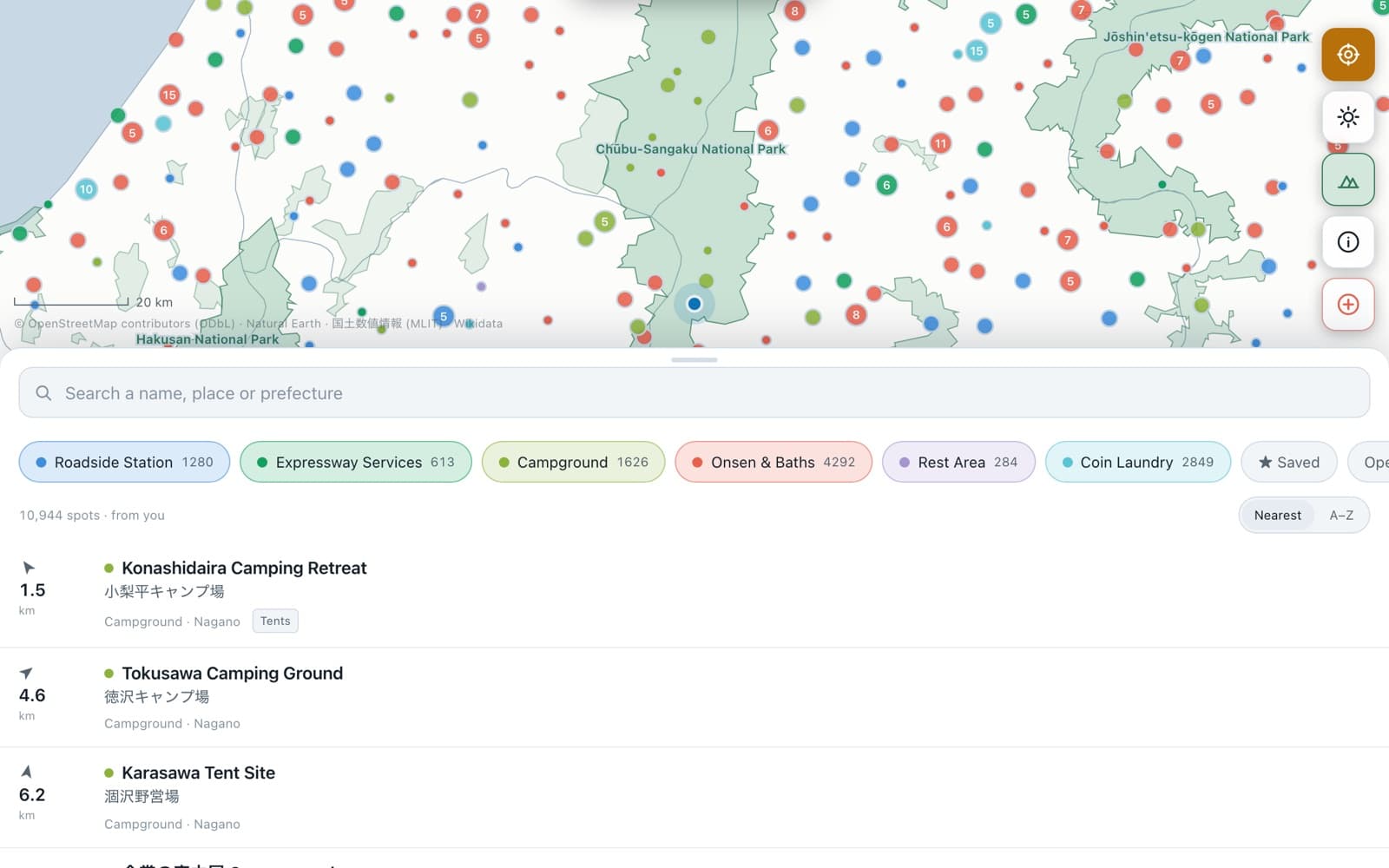
Japan Car Camping Map
A single HTML file holding 10,944 places to stop overnight in Japan — roadside stations, campgrounds, expressway service areas, onsen and coin laundries — with a vector map drawn on canvas, search, distance sorting from your own position, and an emergency screen that reads your coordinates back in the format a 119 operator asks for. It loads nothing from the network, so it works in a tunnel, in the mountains and on a dead SIM. Spots are from OpenStreetMap; the shaded national and prefectural parks are from Japan’s National Land Numerical Information survey.
JavaScriptCanvasOpenStreetMapofflineJapanRead more
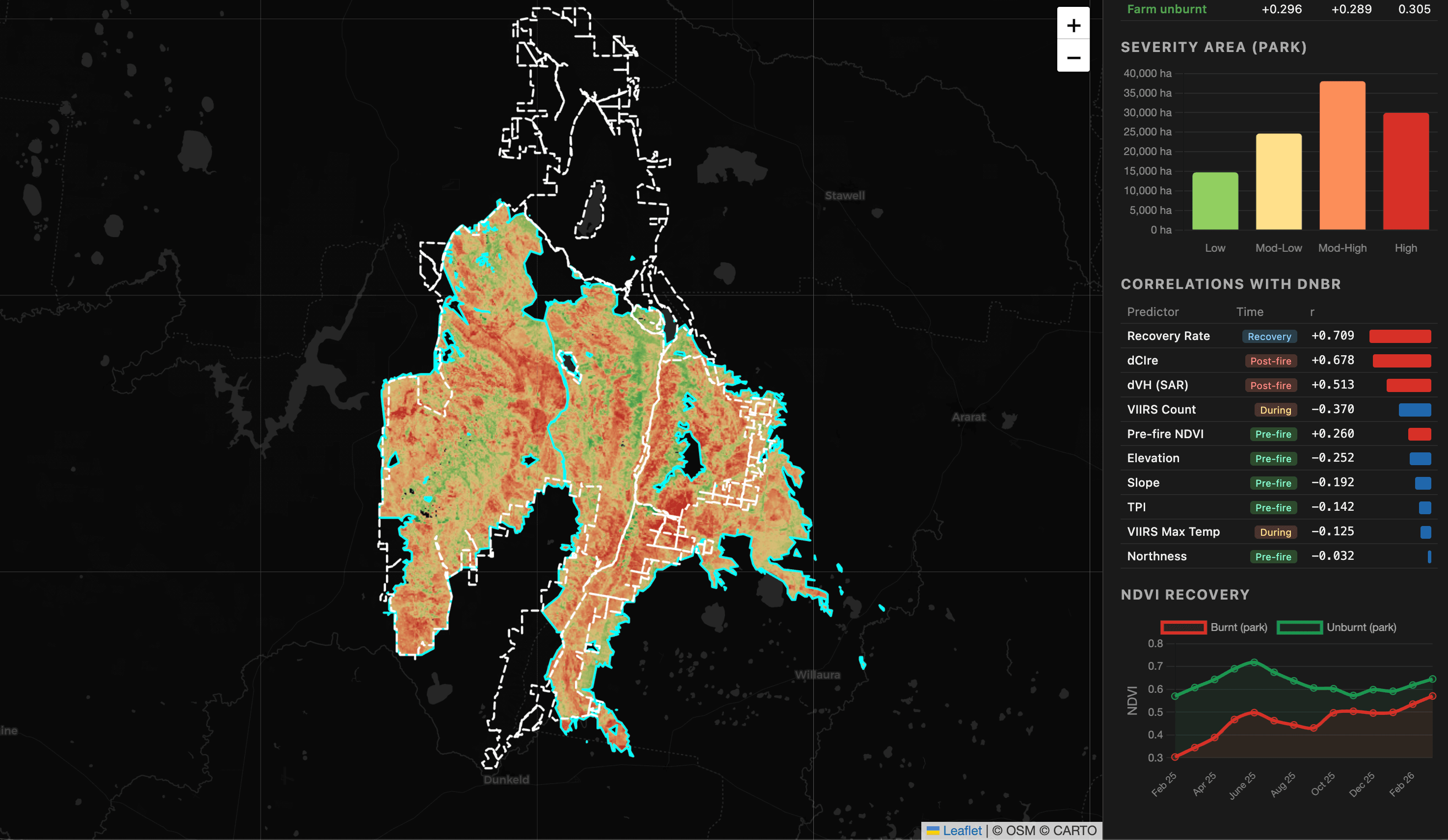
Grampians Fire Severity Explorer
An interactive map and analysis of the 2025 Grampians (Gariwerd) bushfire. Uses satellite data from Sentinel-2, VIIRS, Himawari-9, and ERA5 to predict fire severity at different time points. Includes random forest modelling, feature importance, and NDVI recovery tracking across 135,000 hectares.
PythonLeafletGEEecologyremote sensingRead more
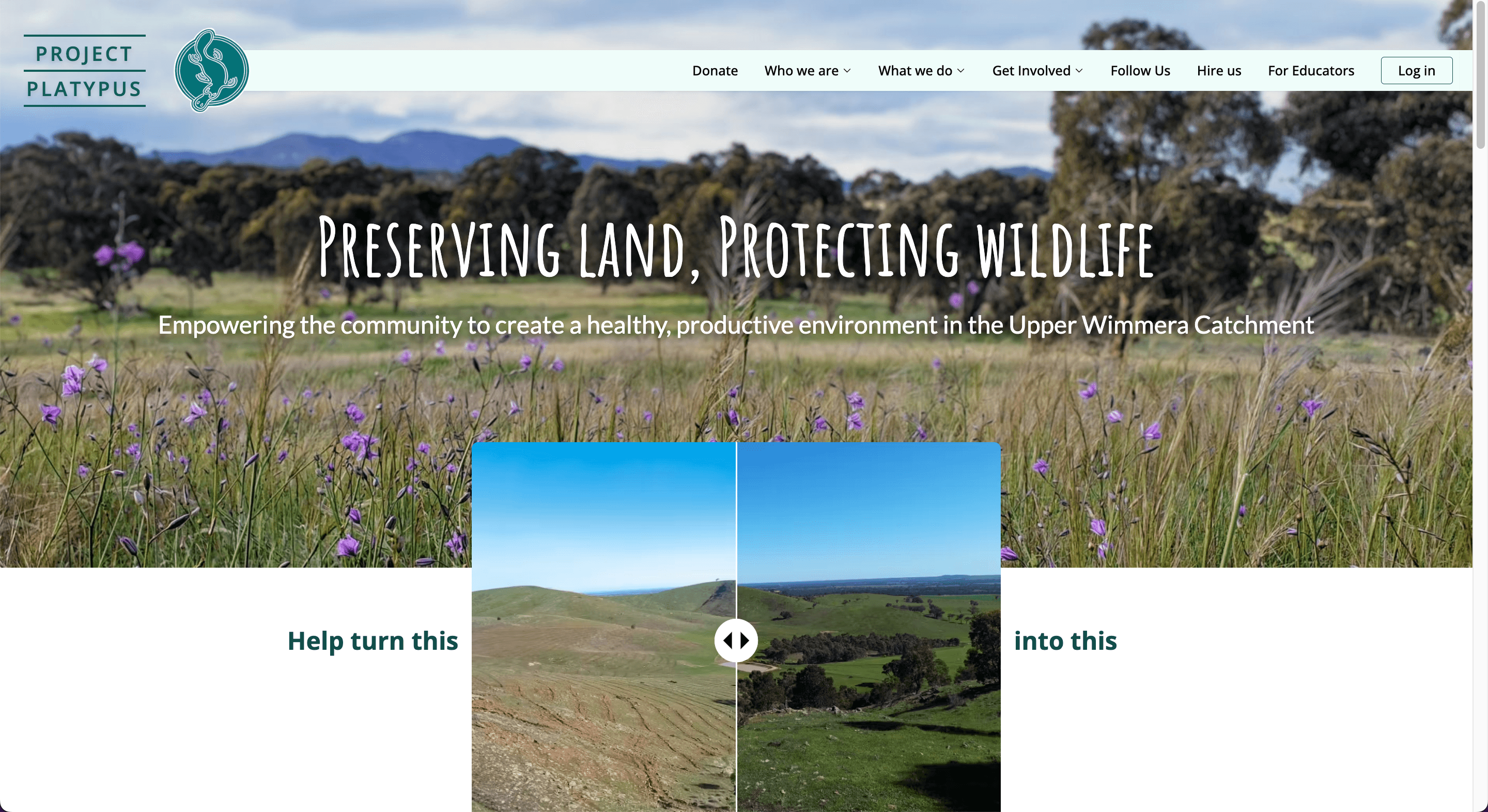
Project Platypus
Project Platypus is an environmental conservation organisation based near the Grampians/Gariwerd. I helped the Project Platypus team design and update their new website to present content on Project Platypus' latest events, news, projects, services, and more.
ReactTypescriptNext.jsTailwindCSSSanity.ioRead more
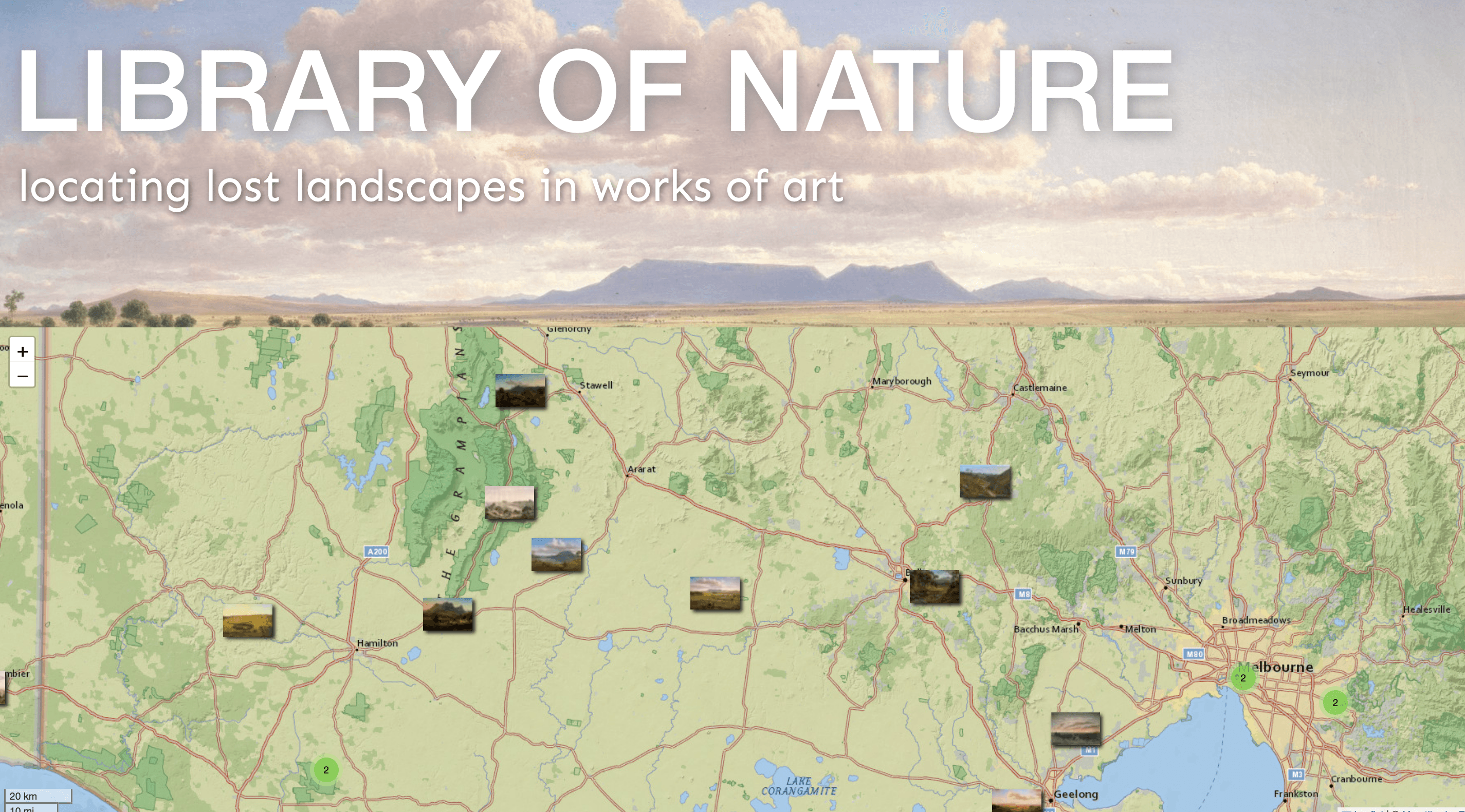
Library of Nature
Many landscapes no longer exist as they once did. Older works of art are some of the best records to help us understand how we have changed our natural world. I created the Library of Nature to help inspire wonder in nature and to highlight the dramatic and rapid changes that have occurred in our world.
ReactNext.jsSanity.ioRead more
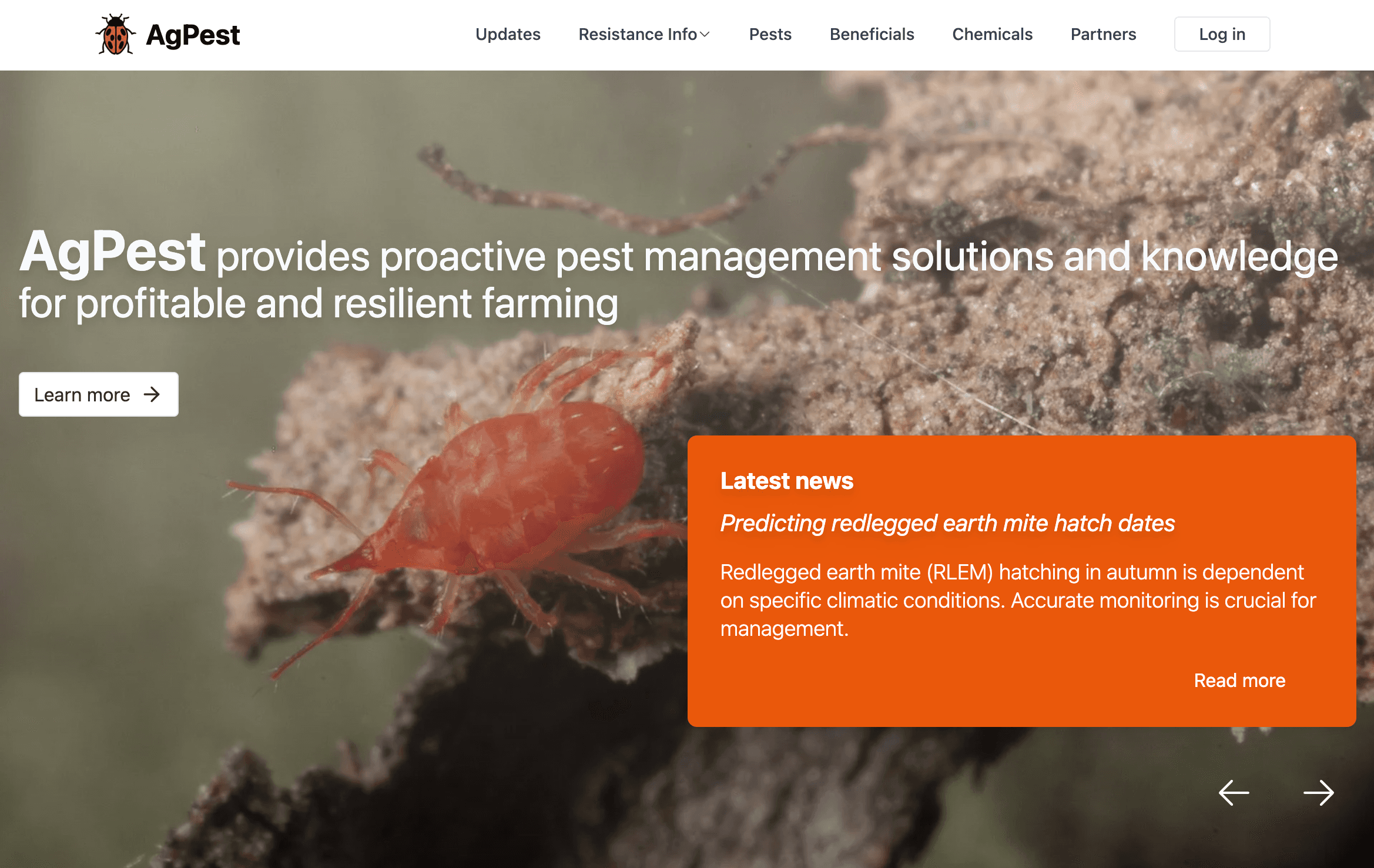
AgPest
AgPest is a home for agricultural pest management information to help maintain pest control outcomes in the face of increasing pesticide resistance evolution, while minimising off-target impacts, such as beneficial insects. The site is a work in progress that attempts to regionalise and simplify the communication of complex interactions between chemicals, pests, beneficial insects, and crops.
ReactNext.jsSanity.ioRead more
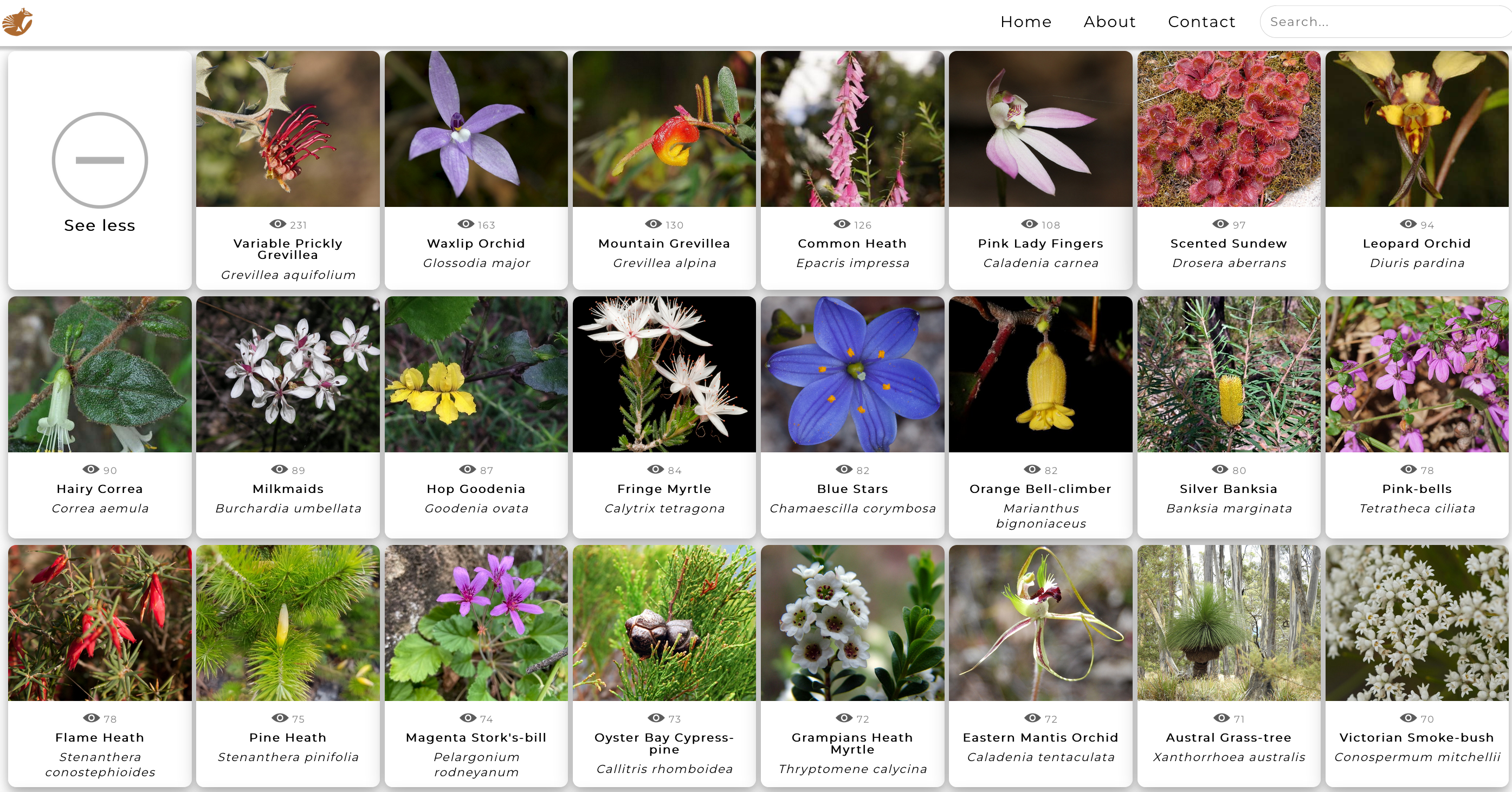
Field Guide
This is a simple field guide that describes the wildlife where I live near the Grampians/Gariwerd. This was the first app I built using React. It utilises the iNaturalist API and user submitted records, but the user interface is much simpler and responsive than iNaturalist. My hope is to use this framework to build similar field guides for other groups who may be encouraged to submit more records to iNaturalist to better populate their own local field guide.
ReactiNaturalistecologyRead more
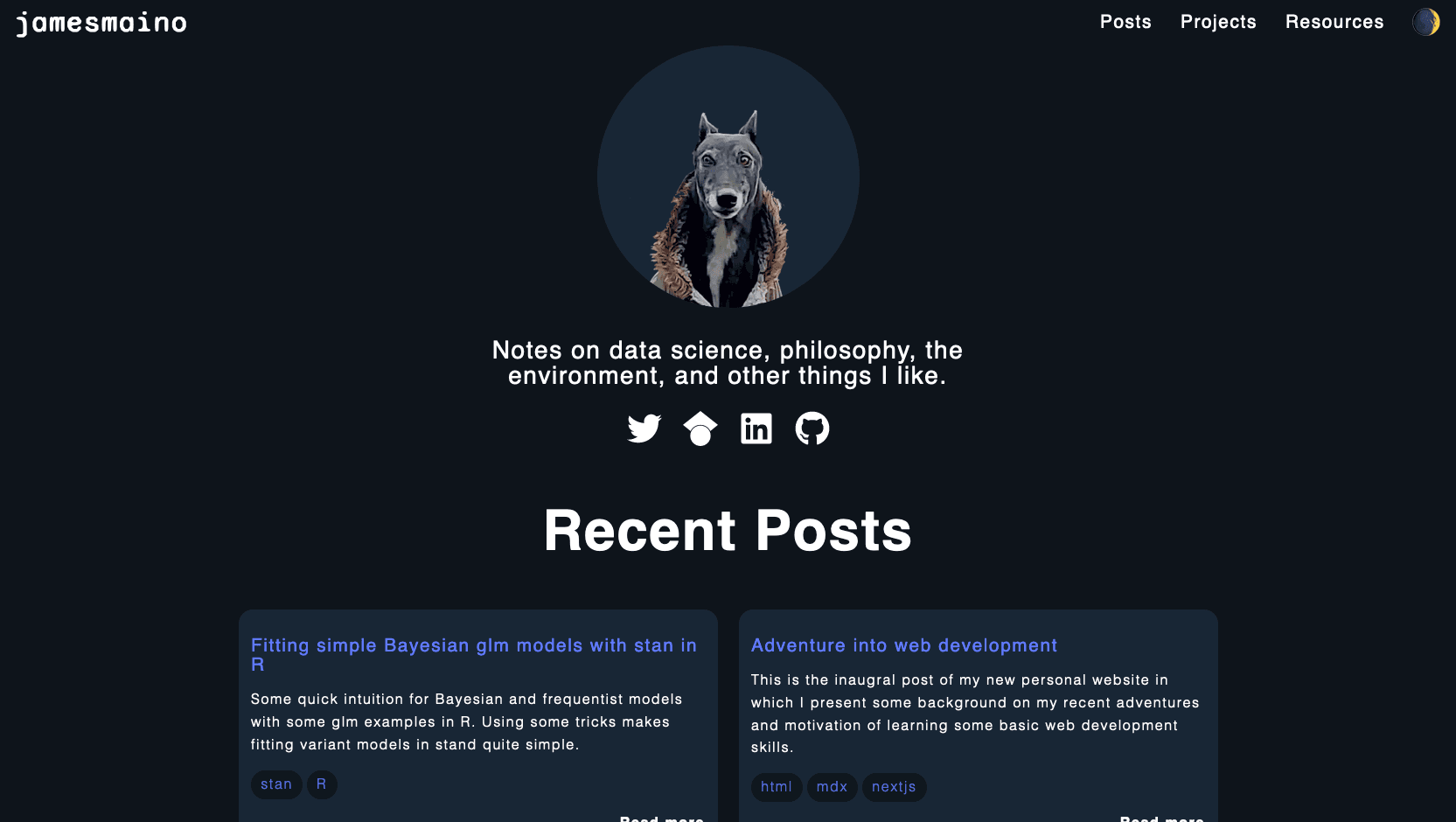
Personal Website
One of my first projects was making a personal website from scratch using as few external libraries as possible. This website uses Next.js for static and server side rendering of react components. I also implemented mdx for writing fancy blogposts with interactive elements. I wrote a blog post about it.
ReactNext.jsmdxRead more